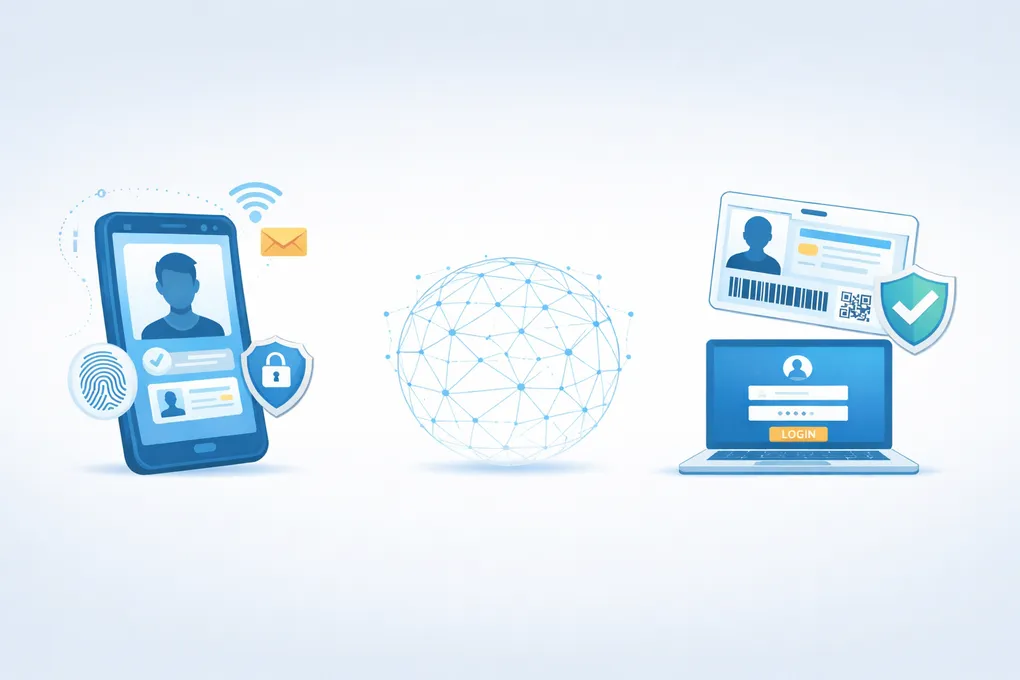
Welcome to Identity Explained, where we break down the complex world of digital identity into clear, practical insights. This is our first post, and we’re starting with the fundamentals.
Every time you unlock your phone, log into email, or buy something online, you’re using a digital identity. But what exactly is it, and why does it matter more than ever in 2026?
Digital Identity: The Simple Definition
Your digital identity is simply a collection of information that represents you in the online world. Think of it as a virtual fingerprint: the unique set of data points that distinguish you from everyone else on the internet.
While your physical identity might be your face, driver’s license, or your passport, your digital identity includes what’s called PII (Personally Idenitfiable Information). These are things that define you and no one else: like your email address, passwords, usernames, social media profiles, purchase history, browsing patterns, and even your typing speed.
Why This Matters to You
In 2026, the average person has accounts on 130+ platforms (according to my password vault, I’m well past 400)… We work remotely, bank online, attend virtual meetings, and store our most important documents in the cloud. Because of how critical these accounts are to our daily lives, our digital identities have become just as important as our physical ones, if not more so.
Consider this: when was the last time you showed your physical ID? Now think about how many times today you’ve logged into an application and had to prove who you are. That’s the shift we’re living through, and at Identity Explained, we believe everyone deserves to understand how it works.
The Three Layers of Digital Identity
Understanding digital identity becomes easier when you break it down into three core components:
1. Personal Information
This is the foundation, the basic facts about you. Your name, date of birth, email address, phone number, and physical address. Some of this information is public, some is private, but all of it helps establish and validate who you are online.
2. Credentials and Authentication
These are the keys to your digital kingdom. Passwords, PINs, security questions, biometric data like fingerprints or facial recognition, and two-factor authentication codes. This layer proves you are who you claim to be.
3. Digital Footprint
This is everything you do online. Your social media posts, search history, purchase patterns, the websites you visit, the apps you use, and even the times you’re most active. The ethics of capturing this data aside, this behavioral data creates a unique pattern that’s distinctly yours and is what makes a lot of companies a lot of money (Facebook, Apple, Google, and every social media site to name a few.). This is what makes things like behavioral analytics possible.
How Digital Identity Works in Practice
Now that we know the different core concepts, let’s put it all together. When you create an account on a new website, here’s what happens:
You provide personal information like your name, email, maybe a phone number, or even link it to a federated account (e.g. log in with Google or Apple or Facebook). The system creates a unique identifier for you, often called a user ID. You set up authentication if the account isn’t federated: typically a password and sometimes adding extra security like two-factor authentication. If it is federated, the identity provider already has your information and provides the MFA security for the new application, but you might still need to log in and allow access. From that moment on, every action you take on that platform becomes part of your digital footprint there.
The website stores all this information in a database so it can remember who you are, what you have access to, and what you can do. When you return and log in, the system checks your credentials against what’s stored. If they match, you’re in. If they don’t, you’re locked out.
Digital Identity vs. Physical Identity: Key Differences
The key difference between digital and physical identities is permanence and control. Your physical identity is relatively fixed. You can’t easily change your fingerprints, DNA, or face. Your digital identity is much more fluid and fragmented.
You might present yourself differently on LinkedIn than on Instagram. Logically, these are probally different parts of your life with different interests. You might use a nickname on gaming platforms and your real name for banking. Each platform holds a piece of your digital identity, but no single entity has the complete picture, at least not in theory.
This fragmentation is both a feature and a bug. It gives you flexibility, privacy, and separation between your professional and personal lives. But it also creates security challenges and convenience problems. Forgotten or outdated passwords, account recovery headaches, and the nagging question of who really controls your data.
Who Actually Controls Your Digital Identity?
This is where things can get a little complicated, so bear with me. Right now, your digital identity is scattered across hundreds if not thousands of companies, each holding different pieces. Facebook knows your personal connections, LinkedIn knows your professional ones. Amazon knows your shopping habits, your bank knows your financial history, and Google knows, well, almost everything you search for.
These companies act as identity providers and gatekeepers. When you use “Sign in with Google” or “Continue with Facebook,” you’re letting these companies vouch for your identity on other platforms (also called a federated identity). It’s awfully convenient, but it also concentrates power in the hands of a select few tech giants.
Governments can also play a role, issuing digital versions of official documents and, increasingly, offering digital ID systems. In some countries, digital identity is becoming as official and important as a passport.
The Security Challenge We All Face
Here’s the honest-to-god truth: your digital identity is valuable, and criminals know it. Identity theft, account takeovers, and data breaches are constant threats. When hackers steal your credentials, they’re not just accessing one account, they’re potentially gaining the keys to your entire digital life. With the sprawl and duplication of your identity across so many systems, it’s unrealstic that you can closely monitor and protect them all.
This is why security matters so much. A weak password on one forgotten account from 2015 could be the entry point that compromises everything. The interconnected nature of digital identity means one breach can cascade across multiple platforms and wreak havoc.
What’s Next: The Future of Digital Identity
One potential emerging solution to many of these problems is called decentralized identity or self-sovereign identity. The basic idea is that you would control your own digital identity, storing it securely on your device or in a digital wallet, rather than having it scattered across company servers.
Instead of every website storing your email and password, you’d prove who you are using cryptographic verification without giving away your actual data. Think of it as showing an ID without handing it over, where the bouncer can verify you’re over 21 without seeing your address, height, or any other details.
This technology is still developing and being tested, but it promises to give individuals more control, better privacy, and stronger security. Whether it becomes mainstream depends on adoption by both users and platforms. We’ll be covering this evolution in future posts on Identity Explained.
What You Can Do Right Now
Understanding digital identity is the first step. Here are practical actions to take control:
- Use a password manager to automatically create and store strong, unique passwords for every account.
- Enable two-factor authentication wherever possible, especially on email, banking, and social media.
- Regularly review your privacy settings on major platforms.
- Search for yourself online to see what information is publicly available.
- Consider the long-term implications before sharing personal information or creating new accounts.
- Outside of banking and social media, you can always provide fake information to the site. Some vaults even allow you to create fake emails on the fly that point to your inbox so you don’t have to give yout your real information.
Your digital identity will only become more important in the years ahead. The better you understand it now, the better equipped you’ll be to protect it, control it, and use it to your advantage.
The Bottom Line
Digital identity isn’t just a technical concept for security professionals. It’s the fundamental way you exist and interact in the modern world. Every login, every post, every transaction adds to the story of who you are online.
The question isn’t whether you have a digital identity, you already do. The question is whether you understand it, protect it, and control it. Because in 2026 and beyond, your digital identity is increasingly inseparable from your identity, period.
Join the Conversation
What aspects of identity are you most concerned about? What questions do you still have? This is just the beginning of our exploration, and we want to hear from you.
Coming up next on Identity Explained: We’ll be diving into the foundational ideas of identity: OIDC vs SAML, how federated identites work, how digital credentials stay secure, and a whole lot more
Follow Identity Explained for clear, practical insights into the world of digital identity, privacy, and security. You can sign up for our newsletter here.